
The Ultimate Varanasi Ganga Aarti Guide: 2026 Timings, Hidden Spots & Local Tips
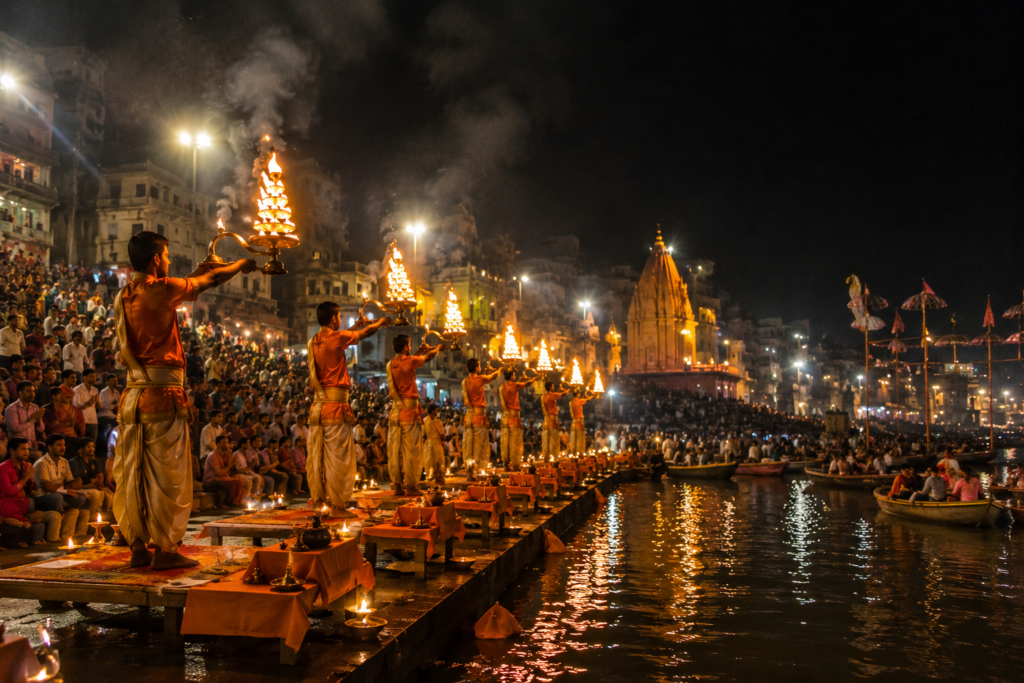
The Ganga Aarti in Varanasi is arguably one of the most spiritually profound and visually spectacular rituals in the world. Every single evening, as twilight settles over the ancient city of Kashi, thousands of travelers, pilgrims, and sadhus gather on the stone steps of the Ganges riverfront.
As heavy brass lamps are lit and the synchronized chanting of Vedic hymns echoes across the water, the river transforms into a sea of flickering fire and deep devotion.
If you are planning your trip to Varanasi, getting your timing and location wrong by even 20 minutes can mean missing the front rows or getting stuck in massive crowd blocks. This local insider guide will ensure you experience the absolute magic of the Ganga Aarti flawlessly.
1. Choosing Your Location: The 3 Best Ghats
While the ritual honors the holy river Goddess Ganga at multiple spots along the riverbank, three specific locations offer completely different atmospheres for tourists:
A. Dashashwamedh Ghat (The Grand Spectacle)
This is the main event. It is the most famous, grandest, and most heavily populated Aarti. Seven young priests stand on elevated wooden platforms and perform highly synchronized rituals utilizing massive tiered brass incense burners and roaring lamps.
Vibe: Electric, loud, intensely spiritual, and heavily crowded.
B. Assi Ghat (The Serene Alternative)
If you prefer a deeply peaceful, intimate experience, head south to Assi Ghat. They host a beautiful evening ritual, but their real claim to fame is “Subah-e-Banaras”—a morning Ganga Aarti held at sunrise, accompanied by classical Indian music and Vedic chanting.
Vibe: Soulful, meditative, and less overwhelming.
C. Lalita Ghat (The Modern Heritage Add-on)
A fantastic modern development located directly below the newly built Kashi Vishwanath Corridor. This makes it incredibly easy to combine a temple visit with the evening Aarti.
Vibe: Highly organized, clean, and easily accessible.
2. Confirmed Ganga Aarti Timings (Seasonal Schedule)
The exact start time of the Aarti hinges directly on the local sunset. Because of this, the schedule shifts significantly between the summer and winter months.
| Season | Months | Aarti Start Time | Recommended Arrival Time |
| Winter | October to March | 5:45 PM | 5:00 PM |
| Summer | April to September | 6:45 PM | 6:00 PM |
| Monsoon | July to September | 6:45 PM (varies based on water level) | 6:00 PM |
Important Local Note: The Aarti happens 365 days a year, completely independent of rain, heat waves, or public holidays. During peak monsoon season, if the river is swollen or flooded, the priests safely relocate the platforms to the higher roof pavilions of the ghat steps.
3. Ghat Steps vs. Boat Ride: Where Should You Sit?
How you watch the Aarti changes your entire experience. There are two primary ways to view it:
Option A: From the Ghat Steps (Free)
Sitting directly on the stone steps places you right in the middle of the local cultural energy. You can feel the heat of the fire lamps, hear the clash of the hand-bells, and smell the burning incense.
Cost: Completely Free. Do not let local touts sell you “entry tickets.”
Strategy: You must arrive at least 45 to 60 minutes early to lock down a spot in the first 3 rows of steps facing the platforms.
Option B: From a River Boat (The Photographer’s Choice)
Hiring a boat lets you sit on the water looking directly back at the steps. This perspective is incredible because you see all seven priests simultaneously, perfectly framed by the glowing backdrop of the ancient city.
Shared Boat Cost: ₹300 – ₹500 per seat.
Private Boat Cost: ₹1,500 – ₹3,500 depending on boat size (rowboat vs. motorboat) and your negotiation skills. Always agree on the price before stepping onto the boat
.
4. Crucial Tips for First-Time Tourists
1.Leave your hotel early:Avoid the choke points.
The main alleyways leading down to Dashashwamedh Ghat become completely gridlocked with pedestrian traffic 45 minutes before the ceremony. Give yourself plenty of buffer time to walk through the bustling market lanes.
2.Dress conservatively:Respect local custom.
This is an active, sacred Hindu religious ceremony. Ensure your shoulders and knees are covered as a sign of basic respect. Lightweight, breathable linen or cotton fabrics are ideal.
3.Secure your belongings:Stay alert in tight crowds.
Varanasi is generally very welcoming, but the dense shoulder-to-shoulder crowd at the main ghat is a playground for pickpockets. Keep your phones, wallets, and camera gear zipped safely into front-facing bags.