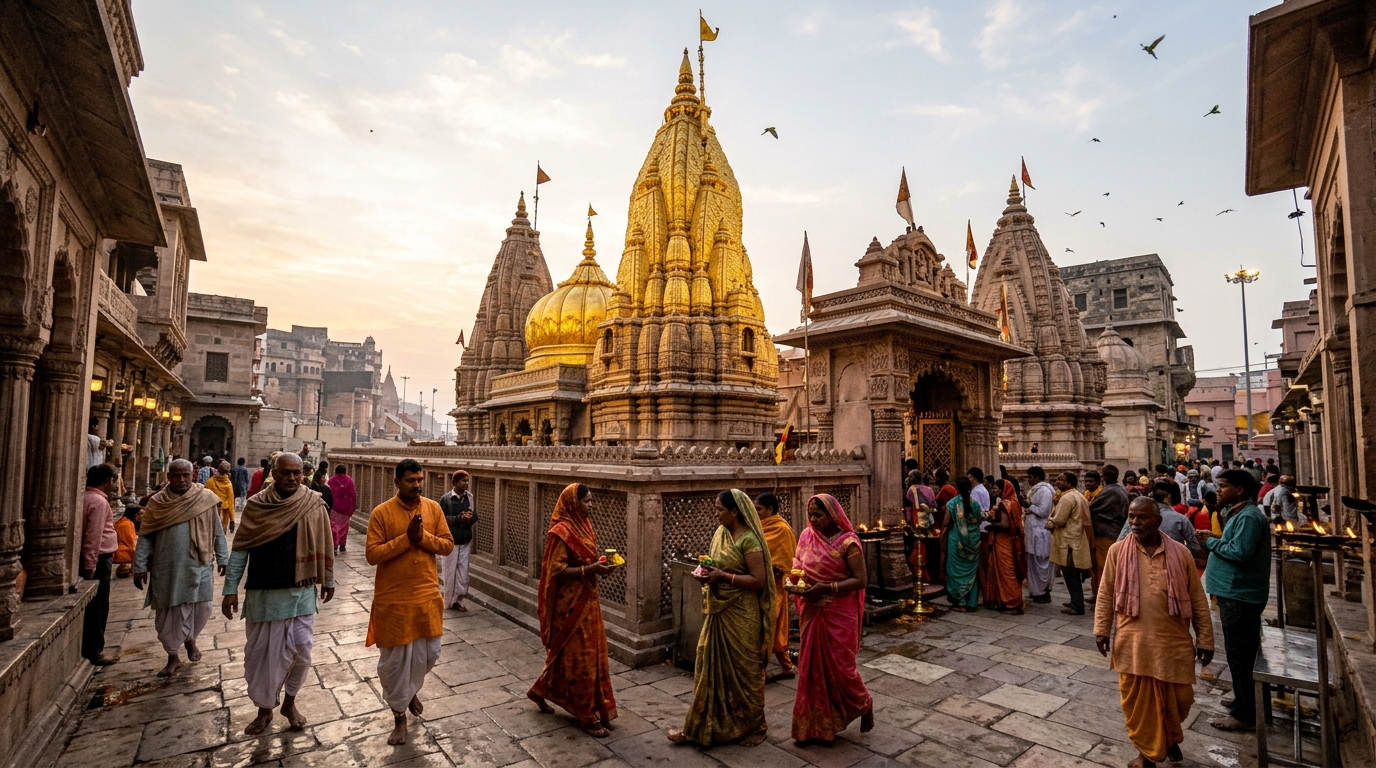
The Divine Abode of the Reliever of Troubles
Varanasi, the eternal city of light, is home to a myriad of sacred shrines, but few resonate with the hearts of devotees as profoundly as the Sankat Mochan Hanuman Temple. Nestled on the banks of the Assi River, this temple is not merely a place of worship; it is a sanctuary for those seeking solace, strength, and spiritual healing. The term ‘Sankat Mochan’ translates to the ‘reliever of troubles,’ and for centuries, pilgrims have flocked to this site, believing that the divine gaze of Lord Hanuman can neutralize the most complex planetary afflictions and personal hardships.
Mythology, Legends & Vedic Origins
The history of this temple is inextricably linked to the saint-poet Goswami Tulsidas, the revered author of the Ramcharitmanas. According to tradition, Tulsidas performed intense penance in this wooded region, then a quiet forest near the Assi stream. It was here that he received a divine vision (sakshatkar) of Lord Hanuman, who appeared to guide him. The temple was subsequently established in the 16th century, marking the exact spot of this miraculous encounter.
What makes this Hanuman temple in Varanasi unique is the orientation of the deity. Unlike most temples where the idol faces a direction of power or the sunrise, the Hanuman idol here is depicted facing Lord Rama, his Ishta Devata. This alignment symbolizes the unceasing devotion and humility that characterizes the Hanuman-Rama relationship, serving as a powerful reminder for devotees to maintain focus on their spiritual path amidst the chaos of worldly life.
Architectural Splendour & Sacred Geometry
The current temple structure, while rooted in antiquity, saw significant expansion in the early 20th century under the visionary leadership of Pandit Madan Mohan Malaviya. The architecture reflects a fusion of traditional Hindu temple styles, characterized by intricately carved stone pillars and a sanctum that radiates serenity. The temple premises are built on sacred geometry intended to channel positive energy, offering a stark contrast to the bustling, narrow lanes of central Varanasi.
The temple also serves as a cultural lighthouse through the ‘Sankat Mochan Sangeet Samaroh.’ During the festival of Hanuman Jayanti, the temple grounds transform into a stage for India’s greatest classical musicians. In a beautiful display of service, these world-class maestros perform from dusk until dawn as an offering of Seva to Lord Hanuman, refusing any monetary compensation, thus maintaining the temple’s spirit of pure devotion.
Rituals, Darshan Procedures & Aarti Timings
The Sankat Mochan temple darshan experience is designed to be egalitarian. There are no VIP lanes or paid entry tickets here. Devotees wait in standard queues to catch a glimpse of the deity. The Sankat Mochan temple varanasi timings are generally from 5:00 AM to 12:00 PM and 4:00 PM to 10:00 PM. On Tuesdays and Saturdays—the most auspicious days—the temple often opens as early as 4:30 AM to accommodate the massive influx of pilgrims.
The Tuesday aarti Sankat Mochan rituals are a highlight for many. The Mangala Aarti (early morning), Bhog Aarti (noon), and the vibrant evening Sandhya Aarti attract thousands. During the Sandhya Aarti, the atmosphere is electric, filled with the collective chanting of the Hanuman Chalisa. It is highly recommended to reach the temple at least 60 to 90 minutes before these timings to secure a spot in the queue.
Step-by-Step Practical Visitor’s Guide
Reaching the temple is straightforward. Located in Saket Nagar, it is well-connected to the rest of the city via auto-rickshaws and e-rickshaws. If you are coming from the Varanasi Junction, it is approximately 7 kilometers away. For those staying near the river, it is a convenient 2-kilometer journey from Assi Ghat.
Security is a top priority. Due to historical sensitivities, the temple has strict protocols: no mobile phones, cameras, or electronic devices are permitted inside. Visitors must deposit these items in the designated lockers at the perimeter. We recommend wearing modest traditional attire—kurta-pyjamas or dhotis for men, and sarees or salwar-kameez for women—to respect the sanctity of the space.
Cultural Etiquette & Local Wisdom
When visiting, understand the role of the pandas and temple staff. Offerings such as Sindoor, Chameli (jasmine) oil, and tulsi garlands are common, but direct application onto the deity is reserved for authorized priests. The iconic Sankat Mochan prasad laddoo, prepared with pure ghee under strict purity guidelines, is highly sought after. Always purchase prasad from the official temple counters to ensure quality.
Be mindful of the local residents—a large community of rhesus macaque monkeys. While considered sacred, they are mischievous. Keep your belongings tucked away and do not display food items. Finally, embrace the quiet, communal spirit of the queue; it is a time for reflection and internal chanting, which is the very essence of a pilgrimage to this sacred site.
Conclusion: A Journey of Faith
A visit to the Sankat Mochan Hanuman Temple is a transformative experience. As you leave the temple, having offered your prayers and sought the blessings of the ‘Reliever of Troubles,’ you carry with you not just the taste of the sacred laddoo, but a sense of profound peace. Whether you come for the music, the history, or to seek relief from the trials of life, the temple stands as a testament to the enduring power of faith in the heart of Varanasi.

Leave a Reply